Custom designs available now!
Discover Different Gemstones
Black Agate
Blue Lace Agate
Black Agate
Physical Properties
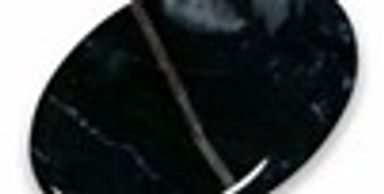
Black agate is a form of chalcedony which is a form of Quartz crystal. When you hold this stone and look at it, it will appear to be solid rock but when you hold it up to the light, you
will notice that it's actually translucent.
Black Onyx
Blue Lace Agate
Black Agate
Physical Properties
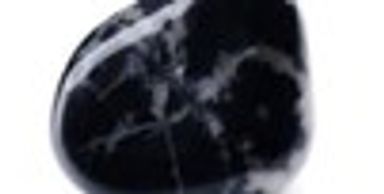
Onyx primarily refers to the parallel banded variety of the silicate mineral chalcedony. Agate and onyx are both varieties of layered chalcedony that differ only in the form of the bands: agate has curved bands and onyx has parallel bands. The colors of its bands range from black to almost every color. Commonly, specimens of onyx contain bands of black and/or white.
Blue Lace Agate
Blue Lace Agate
Blue Lace Agate
Physical Properties
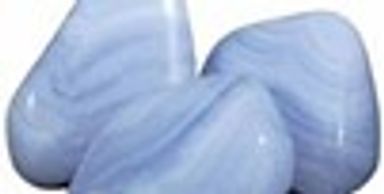
Blue Lace Agate is a variety of banded chalcedony, a mineral of the Quartz family. It is usually banded in layers of predominantly light blue, striped with brighter blues, whites, and even brown threads of color.
Botswana Agate
Bumblebee Jasper
Blue Lace Agate
Physical Properties
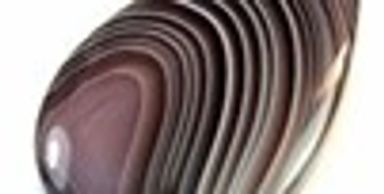
Botswana agate stone is a variation of banded chalcedony, one of the Quartz family minerals. It's mainly striped in different shades of pink and grey, but you may find certain layers containing muted apricot and browns.
Bumblebee Jasper
Bumblebee Jasper
Bumblebee Jasper
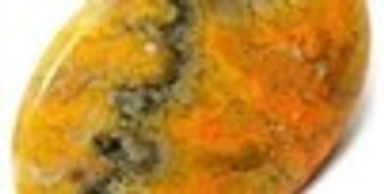
Physical Properties
Bumblebee jasper (which is actually not a true Jasper) is a complex calcium carbonate mineral with inclusions of arsenic and manganese oxides. The banding and layering, which resembles a common bumblebee (hence the name), is caused by inclusions of sulfur (yellow), calcium & Aragonite (white), Orpiment & Realgar (orange), and Pyrite (black).
Chrysocolla
Bumblebee Jasper
Bumblebee Jasper
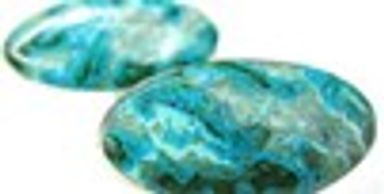
Physical Properties
Chrysocolla has a cyan (blue-green) color and is a minor ore of copper. It is of secondary origin and forms in the oxidation zones of copper ore bodies. Associated minerals are quartz, limonite, azurite, malachite, cuprite, and other secondary copper minerals.
Dendritic Agate/Opal
Dendritic Agate/Opal
Dendritic Agate/Opal
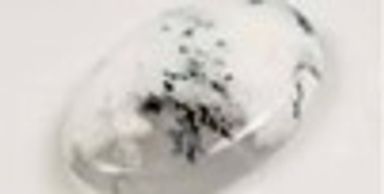
Physical Properties
What we refer to as Dendritic Agates are chalcedony, interspersed with dark black or brown inclusions of manganese- or iron-oxides that form in tree-like patterns (not bands). Like Agate, chalcedony is also a microcrystalline form of quartz.
K2 Jasper
Dendritic Agate/Opal
Dendritic Agate/Opal
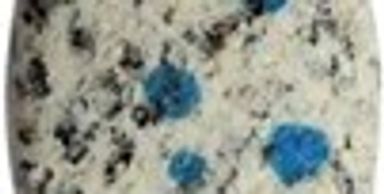
Physical Properties
K2 Jasper is a bright white granite that contains sharply contrasting orbs of bright blue azurite. The azurite orbs range from a few millimeters up to about two centimeters in diameter.
Lapis
Dendritic Agate/Opal
Larimar
Physical Properties
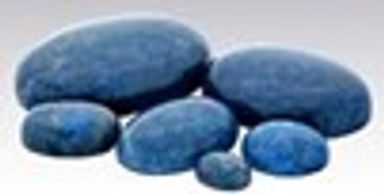
Lapis lazuli or Lapis for short, is a deep-blue metamorphic rock used as a semi-precious stone that has been prized since antiquity for its intense color.
Larimar
Montana Agate
Larimar
Physical Properties
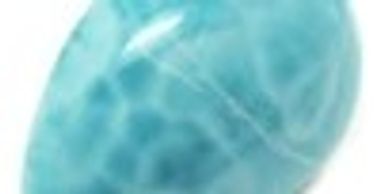
Larimar is a rare type of Blue Pectolite. It occurs within cavities in basaltic lava and forms a solid mass that can sometimes contain other crystals, such as Hematite. Traces of copper play a role in the blue color of the gemstone, but almost all Larimar crystals contain a signature white streak as well.
Montana Agate
Montana Agate
Montana Agate
Physical Properties
Montana Agate is the term given to the stunning chalcedony that is found in the alluvial gavels of the Yellowstone River. It formed during the Pleistocene period from (2,588,000 until 11,700 years BP).
Gemstones
Agates (miscellaneous)
Agates (miscellaneous)
Agates (miscellaneous)

We use many types of agates in our jewelry and most are listed individually. However there are some like Crazy Lace agate, Indian Blanket agate, Australian Creek agate, Indigo Blue Agate that we have placed in this miscellaneous category.
Agate is a common rock formation, consisting of chalcedony and quartz as its primary components, consisting of a wide variety of colors.
Amethyst
Agates (miscellaneous)
Agates (miscellaneous)
Physical Properties
Amethyst is crystalline quartz in colors ranging from pale lilac to deep reddish purple with a relatively high hardness of a MOS 7. Amethyst owes its violet color to irradiation, impurities of iron and in some cases other transition metals.
Aventurine
Agates (miscellaneous)
Aventurine
Physical Properties
Aventurine is a form of quartz, characterized by its translucency and the presence of platy mineral inclusions that give it a shimmering or glistening effect termed "aventurescence."
Malachite
Mohave Turquoise
Aventurine
Physical Properties
Malachite is a secondary mineral of copper, which means it is formed when copper minerals are altered by other chemicals. It occurs when carbonated water interacts with copper minerals, or when a solution of copper interacts with limestone. Malachite is opaque and always green.
Mohave Turquoise
Mohave Turquoise
Mohave Turquoise
Physical Properties
Mohave Turquoise is a composite of natural turquoise, pink opal and bronze dyed purple and formed in Kingman Arizona, home of the famed turquoise of the same name. Each piece is hand cut and unique in the mosaic pattern created.
Ohio Flint
Mohave Turquoise
Mohave Turquoise
Physical Properties
Flint, a variety of quartz, is a hard, durable rock that is composed of silicon dioxide (SiO2), or silica. Flint Ridge flint is noted for its array of colors and suitability for jewelry making and for its long and widespread use by Native Americans.
Petrified Wood
Red Striped Agate
Petrified Wood
Physical Properties
A decorative type of fossil wood where the original organic material has been replaced - usually by chalcedony or agate, but sometimes by opal, coal, pyrite, calcite and others.
Pink Opal
Red Striped Agate
Petrified Wood
Physical Properties
Pink Opal is a natural, pink colored gem-variety of the Common Opal which is composed of Opal, Palygorskite and chalcedony. This slightly translucent to opaque gemstone is valued for its unique pink hue,
Red Striped Agate
Red Striped Agate
Red Striped Agate
Physical Properties
Agate is a common rock formation, consisting of chalcedony and quartz as its primary components, consisting of a wide variety of colors. Agates are primarily formed within volcanic and metamorphic rocks. The ornamental use of agate dates to Ancient Greece in assorted jewelry and in the seal stones of Greek warriors.
Rhodonite
Spiny Oyster Shell and Turquoise
Red Striped Agate
Physical Properties
Rhodonite is a pink manganese silicate mineral of variable composition that often contains significant amounts of iron, magnesium, and calcium. It is often associated with black manganese oxides which may occur as dendrites, fracture-fillings, or matrix.
Sodalite
Spiny Oyster Shell and Turquoise
Spiny Oyster Shell and Turquoise
Physical Properties
Sodalite is a royal blue tectosilicate mineral widely used as an ornamental gemstone. Although massive sodalite samples are opaque, crystals are usually transparent to translucent. Sodalite is a member of the sodalite group with hauyne, nosean, lazurite and tugtupite.
Spiny Oyster Shell and Turquoise
Spiny Oyster Shell and Turquoise
Spiny Oyster Shell and Turquoise
Physical Properties
Spiny oysters possess a striated shell. This means that lines of grooves run along the surface of the shell. Primarily, the shells are striped with fiery coral red and orange.
GEmstones
Turquoise
Physical Properties
Turquoise is an opaque, blue-to-green mineral that is a hydrated phosphate of copper and aluminum. Color is as variable as the mineral's other properties, ranging from white to a powder blue to a sky blue and from a blue-green to a yellowish green. The blue is attributed to idiochromatic copper while the green may be the result of either iron impurities (replacing aluminum) or dehydration.
Thulite
Physical Properties
Thulite, also referred to as Rosaline, is a calcium aluminum silicate mineral that crystallizes in the form of large masses or small prismatic crystals. It's a member of the Zoisite family and is one of the pinkest minerals Mother Earth creates naturally.
Tuxedo Agate
Tuxedo Agate
Physical Properties
Tuxedo Agate is an agate that has been dyed black and has white banding. The natural white lines come through and make a beautiful specialty designer cabochon. Sometimes the dye does not get black and is more brownish.
Discover Silver by Skip's Metal Work
Sterling Silver
Copper and Brass
Sterling Silver
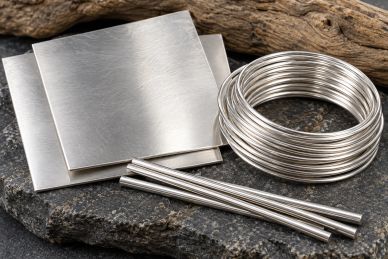
Sterling silver is an alloy of silver containing 92.5% by weight of silver and 7.5% by weight of other metals, usually copper. The sterling silver standard has a minimum millesimal fineness of 925.
Gold Filled
Copper and Brass
Sterling Silver
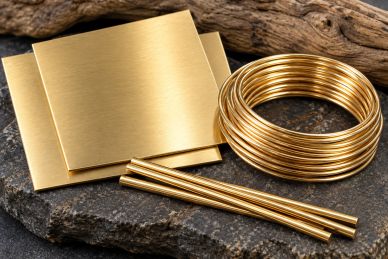
Gold-filled jewelry is jewelry composed of a solid layer of gold (typically constituting at least 5% of the item's total weight) mechanically bonded to a base of either sterling silver or some base metal.
Copper and Brass
Copper and Brass
Copper and Brass
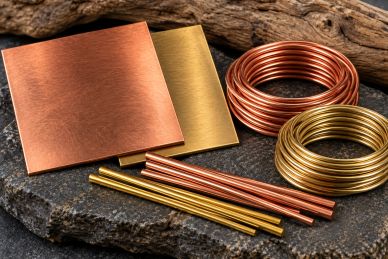
Copper is soft, malleable and one of the few metals that can occur in nature in a directly usable metallic form (native metals). Brass and bronze are similar to each other, both alloys of copper containing tin or zinc respectively. Widely used as a substitute for copper in the making of jewelry or as accent metals along with copper to sterling silver. Often used in mixed metal designs.